The metallurgy and steel manufacturing environment represents one of the most demanding proving grounds for material handling equipment. Unlike standard FMCG warehousing where operations rely on symmetrical wooden pallets and light loads moving metal involves dealing with concentrated weight in compact volumes, flexible laminar dimensions, and low-friction contact surfaces.
Handling strapped steel sheets, coils, structural beams, or foundry pieces without the proper equipment configuration accelerates machine wear and significantly increases tipping and slippage hazards. Below, we break down the critical technical factors required to maintain safe and efficient internal flows in metalworking plants.
1. Load Center Shifting and Long Load Deflection
Most industrial forklifts have their nominal lifting capacities calculated around a standard 500 mm or 600 mm load center. In the steel industry, this baseline is constantly challenged:
Lever effect from oversized loads: A 2-to-3-meter steel sheet pack pushes the actual load center forward. This directly cuts into the forklift's residual capacity, increasing stress on the steering axle, tires, and mast assembly.
Oscillation from elastic deflection: Sheet metal tends to flex and bow at its cantilevered ends. During travel, this bouncing creates dynamic shock loads that strain mast tilt cylinders and threaten stability during sharp turns.
Fork spread and tine length: To minimize flexing and stabilize wide bundles, operators must widen the forks to the maximum chassis limit or utilize widened fork carriages and certified slip-on extensions supporting at least 60-70% of the total load length.
2. Friction Coefficient: Mitigating Metal-on-Metal Slippage
Direct contact between forged steel forks and steel sheet bundles (especially those treated with rust-preventive oil films or galvanized coatings) has an extremely low friction coefficient.
Controlled acceleration and braking: Abrupt deceleration can cause unsecured sheet packs to slide off the forks due to forward momentum.
Backward Mast Tilt (Tilt Back): Throughout transit, the mast must maintain a slight backward tilt so gravity keeps the bundle planted against the heavy-duty load backrest.
Fork protectors and wooden dunnage: Applying protective fork sleeves (such as polyurethane covers or magnetic anti-slip strips) increases surface grip. Furthermore, placing wooden dunnage or spacers between stacked sheets ensures proper fork entry without gouging or edge damage.
3. Structural Rigidity and Lithium-Ion Performance in Harsh Facilities
Fabrication shops and steel processing centers typically host abrasive dust, metal shavings, and pitted concrete floors. Under these conditions, the chassis and powertrain face punishing mechanical cycles:
Reinforced chassis and high-visibility masts: Structural mast channels on HELI heavy and intermediate units are built to resist lateral torsional forces while providing clear sightlines between mast rails, allowing operators to position tines accurately beneath low-profile metal bundles.
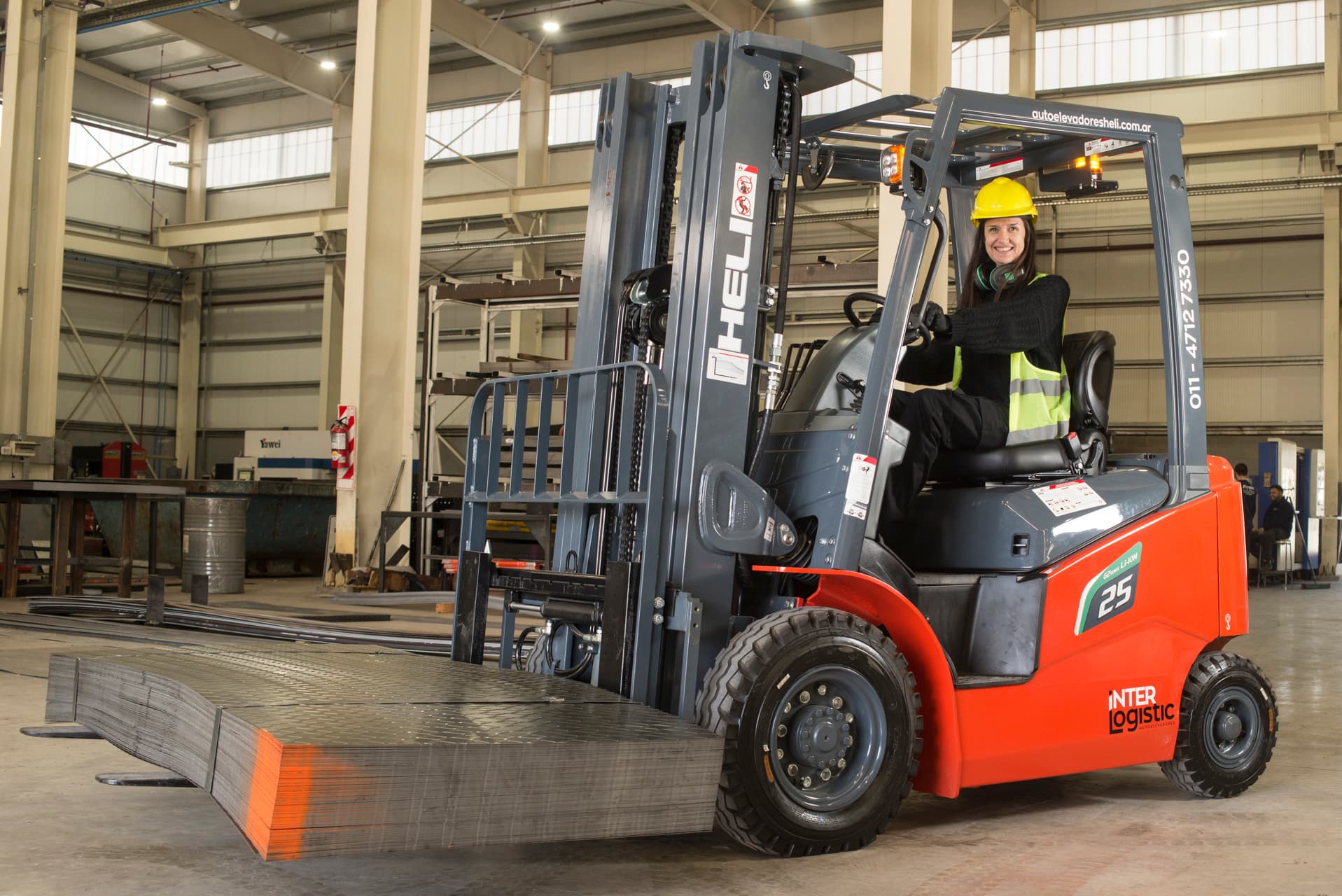
Lithium-Ion advantage in indoor plants: Lithium-powered electric forklifts (such as the HELI 2.5-ton series) deliver instant, smooth torque without the clutch slippage or jerky starts typical of worn mechanical drivetrains. With zero tailpipe emissions and sealed, maintenance-free batteries, they thrive in enclosed manufacturing bays, supporting fast opportunity charging between shifts without bottlenecking production.
Conclusion
Transporting heavy metallurgical loads safely requires a balance of skilled operator technique and robust equipment engineering. Factoring in residual capacity de-ratings and pairing the right mast attachments to the metal's footprint is essential to keeping operations efficient without putting personnel or machinery at risk.
To evaluate your facility's material handling challenges or learn more about reinforced forklift configurations for heavy industry, contact our technical team through our contact section.
Share
The Interlogistic Team
Specialists in industrial logistics and equipment