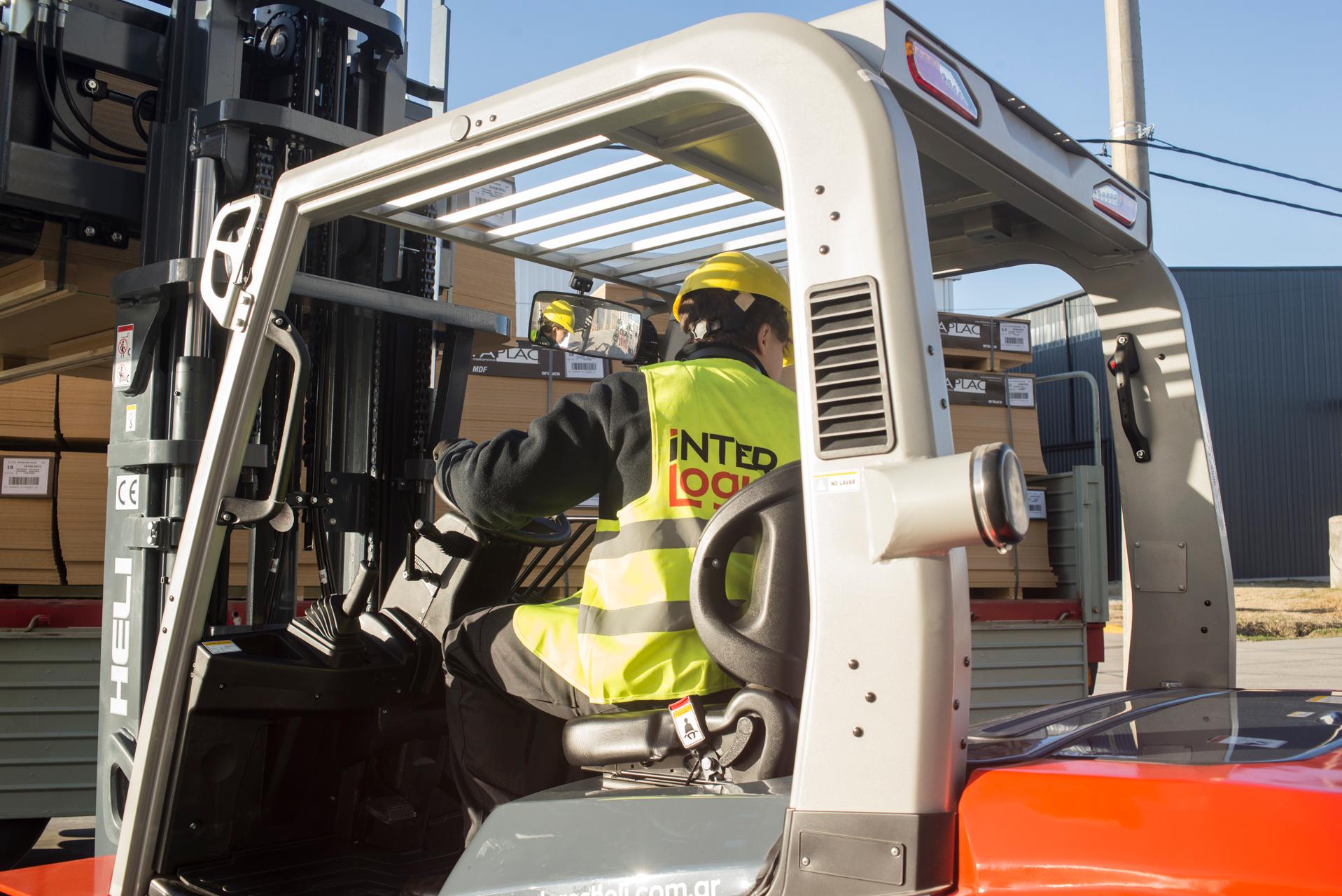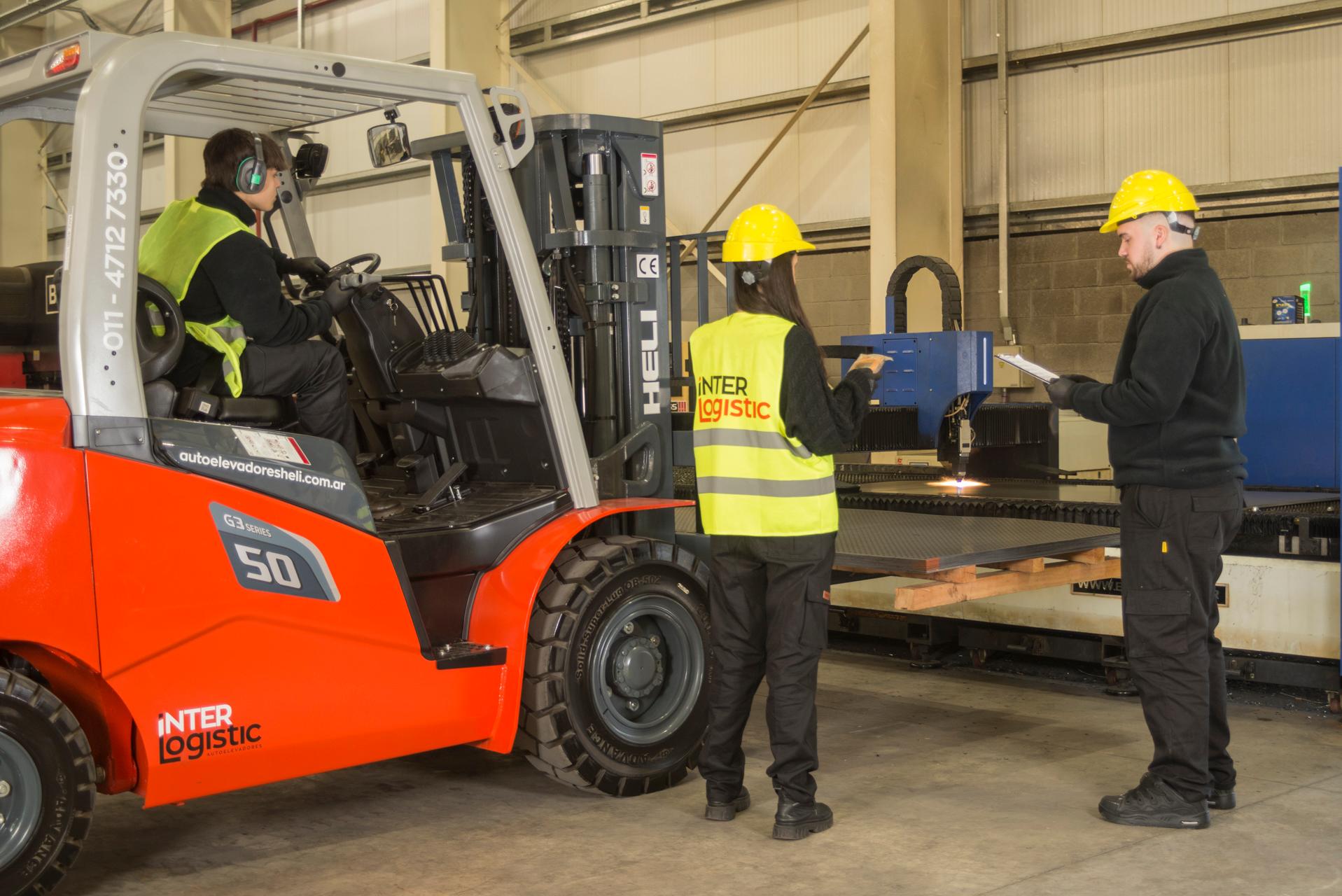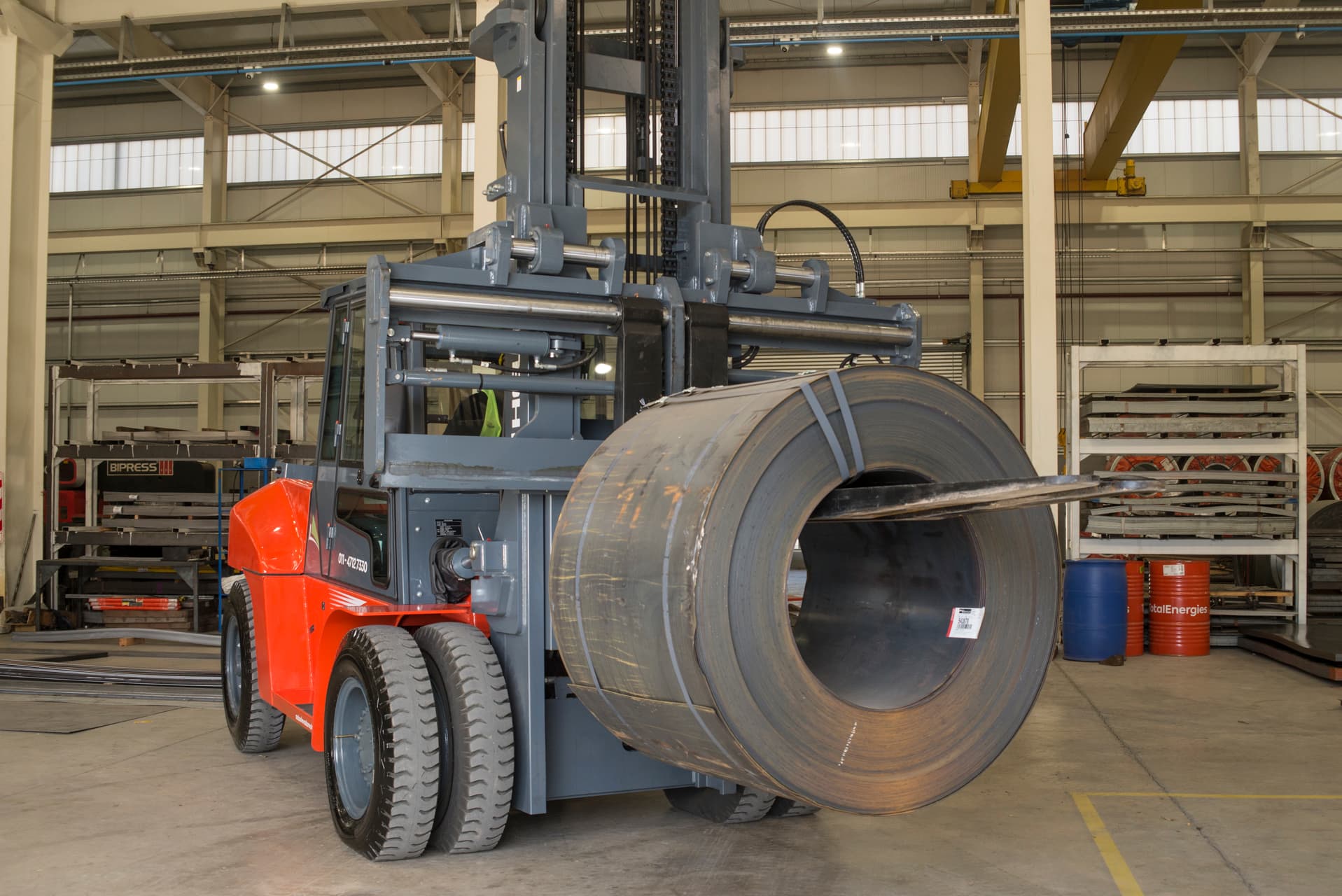
When operations move out of an enclosed warehouse with smooth concrete floors and into an open-air yard, working conditions change completely. Outdoors, forklifts face drainage slopes, expansion joints, and uneven pavement that directly affect machine stability.
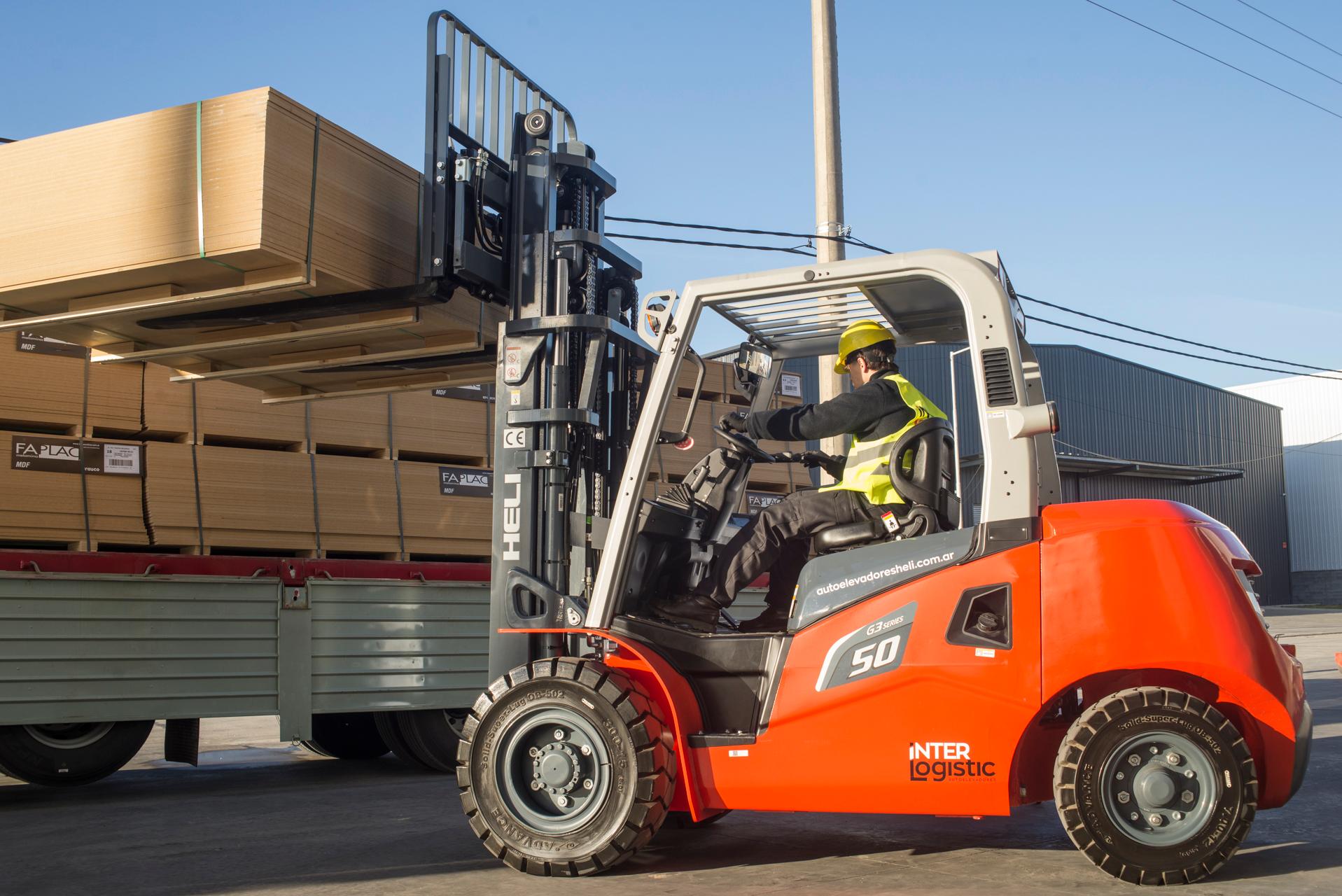
When side-unloading large-format goods from a flatbed truck—such as packs of MDF boards, paneling, or long profiles—the equipment is subjected to very specific mechanical demands. Choosing the right unit for this type of work requires evaluating four key factors.
1. Load center and stability at height
A forklift's rated capacity is measured under standard factory conditions with a compact load resting flush against the mast. However, when handling extra-wide or long packs from the side of a trailer, the center of gravity shifts forward.
Residual capacity loss: By leverage, the further forward the bundle's balance point sits from the mast, the less actual weight the machine can lift without compromising stability.
Counterweight margin: Pulling bulky cargo at trailer deck height requires a solid structural margin. A higher-tonnage model, such as the 5-ton HELI G3 Series, provides the counterweight and rigidity needed to keep the rear steering axle firmly planted throughout the descent.
2. Tires built for uneven terrain
Smooth cushion tires are built strictly for flat indoor floors; in an open lot, they transmit every impact directly to the mast and the material being moved.
Traction and shock absorption: Exterior loading areas with joints or surface irregularities require broad-profile, deep-tread tires. This tread absorbs pavement bumps and ensures reliable grip when braking or maneuvering parallel to the vehicle.
Sway control: When operating with forks raised above the truck's drop sides, any ground incline is amplified overhead. A sturdy, wide-track chassis reduces lateral sway while pulling the stack clear.
3. Extended carriage and cargo containment
When moving long materials, how the tines support the base prevents damage before goods ever enter storage.
Distributed support: If the blades sit too close together in the center, the outer ends of the boards flex under their own weight, which can snap edges or break strapping. An extended fork carriage lets the operator spread the tines outward to engage directly beneath the wooden spacers.
Rear containment: A tall load backrest provides an even surface against the back of the pile, keeping upper layers from sliding toward the mast when tilting back.
4. Precision during side unloading
Flatbed side-unloading carries a common hazard: pushing the forks past the depth of the bundle and blindly shoving the adjacent row off the opposite side of the trailer.
To prevent this, the operator must insert the tines only until the pack rests flush against the backrest, lift smoothly clear of the deck, reverse in a straight line, and lower the load close to ground level before making any turn in the lot.
To explore forklift models engineered for open-air work and high-volume operations, browse our products section or reach out directly through our contact section.
Share
The Interlogistic Team
Specialists in industrial logistics and equipment