
Forklifts are critical tools for the productivity of any industrial warehouse, but globally they also constitute one of the primary causes of occupational hazards if not operated under strict protocols. When handling machinery that combines high unladen weight with moving loads of several tons, proactive prevention is the only valid strategy to guarantee a zero-accident environment.
Different Forklifts, Different Precautions
Safety begins by understanding that each powertrain technology requires specific inspections. Whether your fleet features battery-powered electric forklifts or internal combustion units (driven by Diesel or LPG Gas), there are specific conditions that the operator must check daily:
In electric equipment: The critical risk lies in the incorrect handling of batteries during fast or opportunity charging processes, and in operating the machine when the power is at its depletion limit.
In combustion equipment: The tightness and proper anchoring of gas tanks, thermal fluid levels, and tire wear conditions must be closely inspected.
Next, we detail an analysis of the four most common accidents in warehouses and the technical guidelines to neutralize them:
1. Tip-overs Due to Excessive Speed
Speeding and the loss of traction when taking sharp turns are direct triggers of lateral instability, making forklifts highly prone to tilting and tipping over.
How to prevent it: Every logistics center must have a stipulated maximum speed limit and clear industrial safety signage. Operators must be trained to drastically slow down on wet floors or tight turns. Electronically configuring controlled speed modes (such as Slow or Economy modes on the HELI electric line) helps automate this limit in confined areas.
2. Pedestrian Strikes and Bystanders in Traffic Areas
Mixed traffic—where pedestrians and heavy machinery share the same physical space—is one of the greatest safety flaws in high-density warehouses.
How to prevent it: It is mandatory to rigorously define and delimit pedestrian walkways using epoxy paint road markings or physical barriers. This relieves pressure on the driver, who no longer has to guess if a pedestrian will step out from behind a rack.
Protective equipment: All personnel walking through forklift traffic areas must mandatory wear fluorescent reflective vests, hard hats, and steel-toed safety boots to maximize their visibility and protection at long distances.
3. Mechanical Failures Due to Lack of Daily Inspection
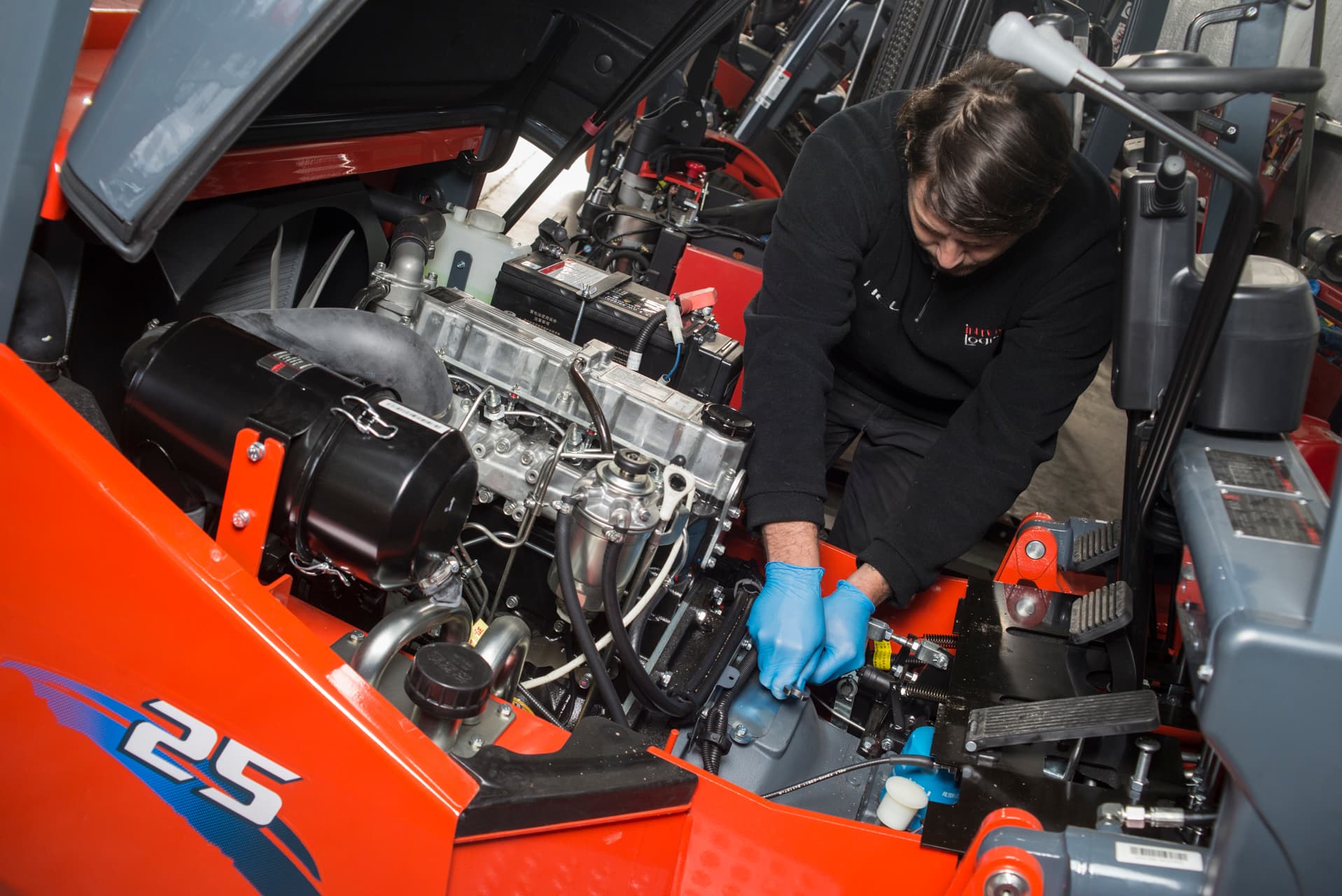
Many serious accidents occur due to unforeseen failures in braking, steering, or hydraulic hose systems, resulting from omitting basic preventive checks in the workshop.
How to prevent it: A mandatory daily checklist protocol must be implemented at the start and close of each work shift. The operator must visually and mechanically verify the condition of the forks, tire pressure, and digital dashboard alerts. If the slightest anomaly is detected, the forklift must be locked out and tagged out (Lock-out / Tag-out), and its use remains strictly prohibited until a maintenance supervisor verifies and repairs the fault.
4. Accidents Due to Misuse and Operational Negligence
This section encompasses reckless behaviors that challenge the physical limits of the machine's structure:
Ignoring the maximum load capacity: Every driver must precisely know the weight of the merchandise and cross-reference it with the forklift's technical data plate. Exceeding the rated capacity causes instantaneous lifting of the rear axle (loss of steering) and a severe tilt of the mast, leading to falling materials or structural failures. If the technical sheet is not at hand, the data must be read directly from the metal plate riveted to the equipment's chassis.
Misuse of the forks: The tines are designed exclusively to lift and move pallets evenly. Using the tip of the forks as a lever to move structures or push heavy loads at ground level permanently damages the hydraulic system and fatigues the tower's steel.
Improper use on incorrect surfaces: Indoor equipment damages its chassis and polyurethane wheels if subjected to stony terrain, outdoor potholes, or mud—environments reserved exclusively for All-Terrain machinery.
Critical Personnel Care: Rules of Cohabitation
Passenger prohibition: The forklift is a single-seat material handling vehicle. Under no circumstances should other operators be allowed to ride hanging from the chassis or the forks.
Safe lifting of people: If it is necessary to lift a worker for maintenance tasks or cyclical stock counts, it is strictly prohibited to do so on an improvised pallet. An approved safety platform or cage must be used, firmly anchored to the fork carriage by chains or locks, and the elevated operator must wear a fall-arrest safety harness connected to the structure.
Load exclusion zones: No one should ever be allowed to walk or stand beneath an elevated load. During rack slotting maneuvers, an exclusion zone must be respected where no pedestrian can enter.
Conclusion
Sustaining a culture of workplace safety and permanently training your drivers not only prevents serious accidents but also substantially extends the life of your components and reduces costs from merchandise breakage.
If you are looking for technical advice for your fleet's safety, need genuine spare parts for your equipment, or want to coordinate preventive maintenance, you can send us a direct message on the CONTACT tab by clicking here.
Share
The Interlogistic Team
Specialists in industrial logistics and equipment
.jpg&w=3840&q=75)