In the world of logistics and cargo handling, several factors determine the type of machinery required to execute daily operations. Throughout this article, we will examine the main features and differences between machines destined for the agricultural sector and those built for the road and construction sector.
Agricultural Machinery: Optimization in the Field
When we talk about agricultural machinery, we refer to equipment specifically engineered for agribusiness, allowing tasks like soil preparation, sowing, and harvesting to be performed much faster and more effectively.
Its impact has been so significant that agricultural mechanization is considered one of the greatest engineering achievements of the 20th century. Thanks to the integration of technology into the field, global production capacity has multiplied exponentially, optimizing daily labor, reducing operational times, and yielding better harvest results.
Main advantages of using agricultural machinery:
Long-term operational cost savings.
Drastic increase in productivity per hectare.
Higher quality crops and agricultural results.
Optimization and automation of heavy-duty tasks.
Real-time data visualization and performance tracking.
This sector comprises a massive variety of machines and adaptable attachments, such as tractors, shredders, sweepers, brush cutters, rotary tillers, and harvesters, among others.
Road Machinery: Strength for Construction and Heavy Logistics
This category includes the group of machines utilized in construction and public works. Its primary purpose is to move or excavate earth to modify the surface according to project requirements, as well as to transport, load, unload materials, and shape the terrain.
Technical features
All machines implemented in this sector are built to withstand the harsh and demanding conditions they face during daily operations:
All-wheel drive systems: Most feature 4WD/AWD or crawler track systems to maneuver safely over rugged, muddy, or rocky terrain.
Tire protection: While some machines have very wide tread tires to prevent sinking, others use rubber tires covered in steel mesh to protect them against damage from sharp rocks.
Main types of road machines:
Hauling: Includes reinforced trucks for heavy-duty tasks, dump trucks, concrete mixers, or heavy-tonnage pallet and container movers.
Demolition: Wrecking balls, hydrofrazes, mechanical hammers, or cutting blades.
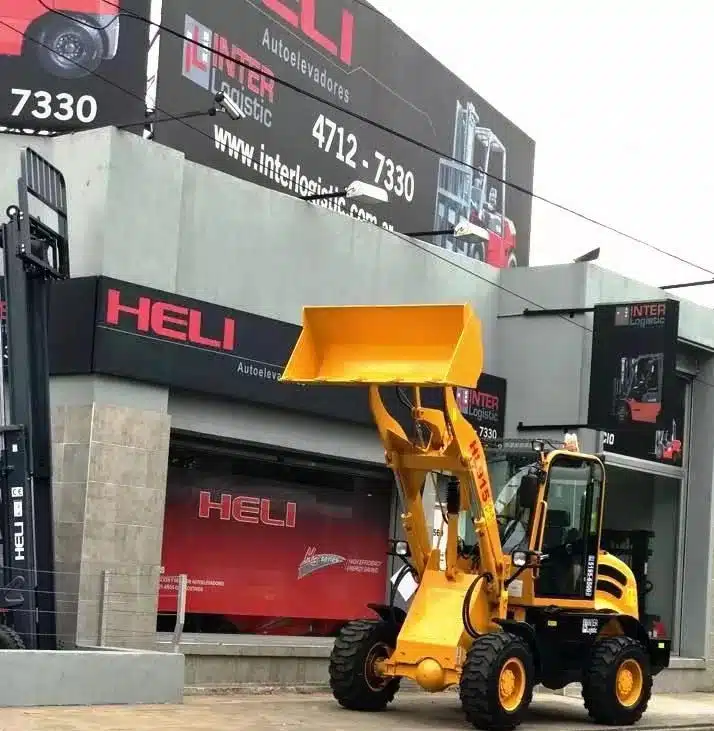
Excavation and Loading: Draglines, skid steer loaders, backhoes, and wheel loaders. At Interlogistic, we offer HELI brand wheel loaders with load capacities ranging between 1,500 kg and 2,000 kg, equipped with 0.7 m³ and 1 m³ buckets respectively, ideal for the efficient movement of aggregates and heavy materials.
Grading and Moving: Bulldozers, scrapers, and motor graders.
Terrain Preparation: Rollers and sheepsfoot rollers.
If you want to learn more about our HELI wheel loaders and our entire heavy machinery line, you can visit our products section by clicking here.
Share
The Interlogistic Team
Specialists in industrial logistics and equipment
.jpg&w=3840&q=75)