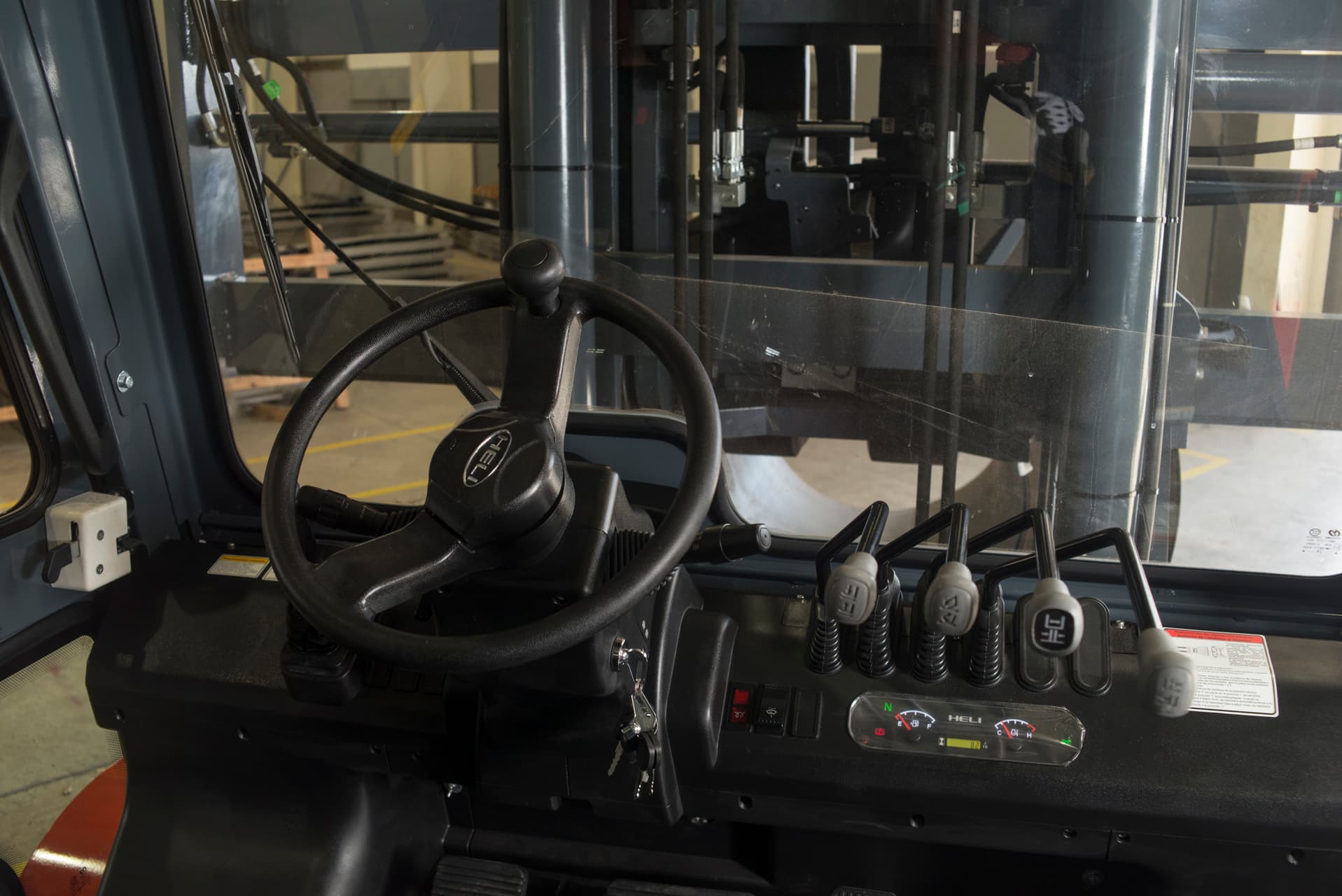
In 8 to 12-hour shifts, the interaction between the driver and the machine is continuous. Spending full workdays exposed to vibrations, forced postures, or stiff controls generates cumulative physical fatigue that impacts focus, slows down maneuvering times, and increases the risk of scrapes or damage to goods.
Engineering applied to the operator station is no longer a secondary detail but a key factor in efficiency. Designing a cabin focused on operator well-being protects staff health and ensures that the work pace remains steady from start to finish. Below, we break down the essential ergonomic elements in modern forklifts.
1. Vibration Reduction and High-End Seats
The repetitive impact of driving over expansion joints, uneven floors, or ramps directly affects the operator's spine if the equipment lacks proper shock absorption:
Adjustable suspension seats: Allow adjusting the firmness and travel of the shock absorber according to the operator's body weight, providing anatomical lumbar support.
Cabin insulation: The HELI line incorporates silentblocks and rubber mounts at the base of the cabin that absorb vibrations generated by the engine and transmission before they reach the seat.
Spacious floating floor: Designed with thick anti-slip rubber mats to cushion foot support and reduce leg fatigue.
2. Reachable Controls and Unobstructed Field of View
The repetitive nature of movements when operating the mast for hours causes shoulder and wrist strain if controls are poorly positioned:
Smart lever layout: The arrangement of mechanical controls next to the steering wheel allows operating them with a natural and relaxed arm posture. (Note: Depending on the model and operational requirements, HELI lineups offer both these smooth-action traditional levers and electronic Fingertip systems).
Wide-visibility mast: The internal arrangement of hydraulic hoses and the chain design open up the frontal visual field, preventing the driver from leaning or stretching their neck outside the cabin to see the fork tips.
Low-effort power steering: Reduced-diameter steering wheels with a control knob and tilt-adjustable steering column to precisely adapt to each driver's physical build.
3. Work Environment and Accessibility
Facilitating getting on and off the machine is as important as comfort while driving, especially in operations where the driver must frequently step down to check documentation or labels:
Safe three-point access: Wide, low-height steps with anti-slip tread and firm grab handles on both sides of the frame.
Soundproofing and climate control: Enclosed cabins with thermo-acoustic insulation, heating, and air conditioning systems to operate these forklifts outdoors or in cold storage facilities without experiencing temperature extremes.
Conclusion
Incorporating forklifts with high ergonomic standards is a strategic decision that protects a company's most valuable asset: its people. A comfortable working environment translates into more precise maneuvers, less physical strain, and a steady warehouse flow all week long.
If you are analyzing fleet renewal and want to know which models prioritize operator comfort and safety, we invite you to explore our HELI products catalog. To receive tailored technical advice for your operation, feel free to write to us through our contact section.
Share
The Interlogistic Team
Specialists in industrial logistics and equipment
.jpg&w=3840&q=75)