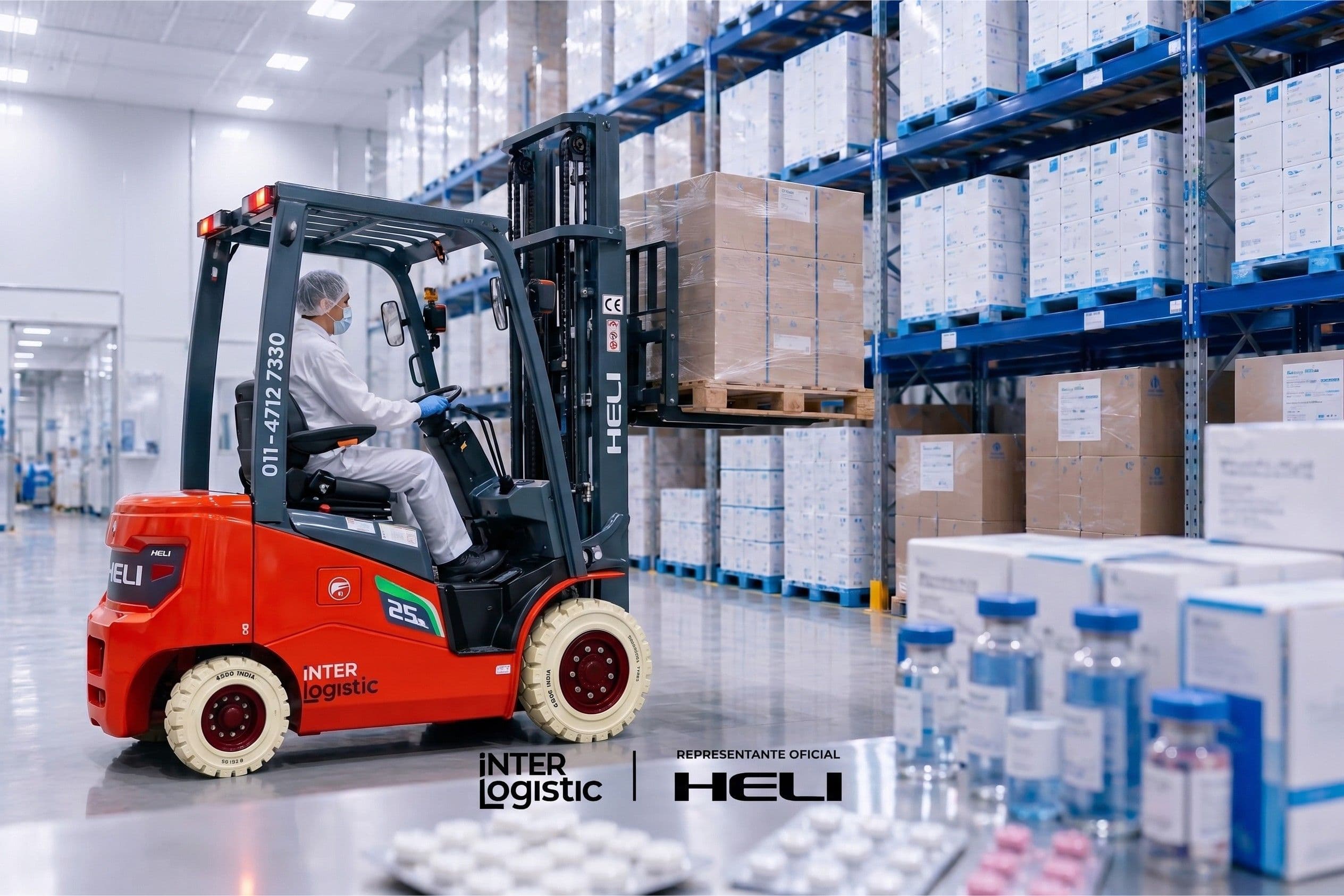
Handling loads in the food, beverage, cosmetics, and pharmaceutical industries leaves no margin for error when it comes to hygiene. The presence of exhaust gases, oil micro-droplets, or rubber residue on floors can compromise raw material safety and lead to serious audit findings from regulatory bodies like ANMAT or SENASA.
To meet these demands, intralogistics in clean environments and cleanrooms requires machinery specifically engineered to eliminate any risk of cross-contamination. Below, we review the essential technical features that electric forklifts and stackers must have for this type of facility.
1. Zero Direct Emissions and Sealed Motors
The first essential requirement for operating in packaging bays, drug storage facilities, or food storage cold rooms is the total elimination of internal combustion engines:
100% electric propulsion: Lithium-ion technology and AC (alternating current) motors in HELI equipment generate zero exhaust gases or particulate matter, keeping indoor air quality intact.
Sealed components and soundproofing: Traction and lift motors feature high IP protection ratings that prevent dust or moisture ingress while drastically reducing noise levels inside the industrial facility.
Precision hydraulic systems: High-tolerance sealed hoses and fittings prevent accidental hydraulic fluid leaks onto the packaging line.
2. Non-Marking Tires and Epoxy Floor Maintenance
Logistics centers in the pharma and food sectors often feature concrete floors with white or light gray epoxy coatings, essential for detecting dirt and facilitating disinfection:
Anti-trace tires (Non-Marking): Made from light rubber or polyurethane compounds without carbon black, these wheels avoid leaving dark scuff marks on the floor during turning or braking maneuvers.
Low static dispersion: Non-marking tires are combined with chassis ground straps or brushes to dissipate accumulated static electricity without generating sparks in classified areas.
3. Resistance to Sanitization Processes and Cold Storage
In both food processing and the pharmaceutical cold chain, equipment is exposed to frequent washdowns or drastic temperature changes:
Anticorrosive chassis and components: Structures treated with high-durability coatings and exposed components prepared to withstand constant moisture or cleaning with industrial detergents.
Cold storage preparation: HELI cold package options integrate special low-viscosity lubricants and heating systems for displays and cylinders to operate continuously in sub-zero temperatures without fluid freezing.
Conclusion
Adapting your material handling fleet to clean logistics requirements is a key step to ensuring facility quality certification and protecting final product integrity. Having electric machinery designed for this level of demand simplifies audit processes and optimizes workflow.
If you are looking to upgrade your plant's fleet or quote electric stackers and forklifts equipped with non-marking tires, we invite you to explore our HELI products catalog. For personalized technical advice on configurations for the food or pharmaceutical industry, feel free to write to us in our contact section.
Share
The Interlogistic Team
Specialists in industrial logistics and equipment
.jpg&w=3840&q=75)