.jpg&w=3840&q=75)
When adding a forklift to your fleet, focusing the financial decision solely on the purchase invoice price represents an incomplete view. The initial acquisition value (CAPEX) usually accounts for only 15% to 20% of the total outlay that the machine will demand over its lifespan. The remaining percentage corresponds to ongoing operating costs (OPEX).
To make efficient investment decisions, purchasing and operations managers rely on the Total Cost of Ownership (TCO). Calculating the real cost per hour of work allows you to compare technologies, evaluate the optimal replacement timing, and avoid hidden overhead costs in the warehouse.
1. Maintenance and Energy Consumption Per Engine Hour
The first step in consolidating TCO is auditing the direct inputs required to keep the machine moving during each operating shift:
Energy or fuel consumption: Calculate expenses in liters of diesel/LPG or kWh consumption from the electrical grid. Lithium technology in forklifts drastically reduces this variable compared to traditional internal combustion.
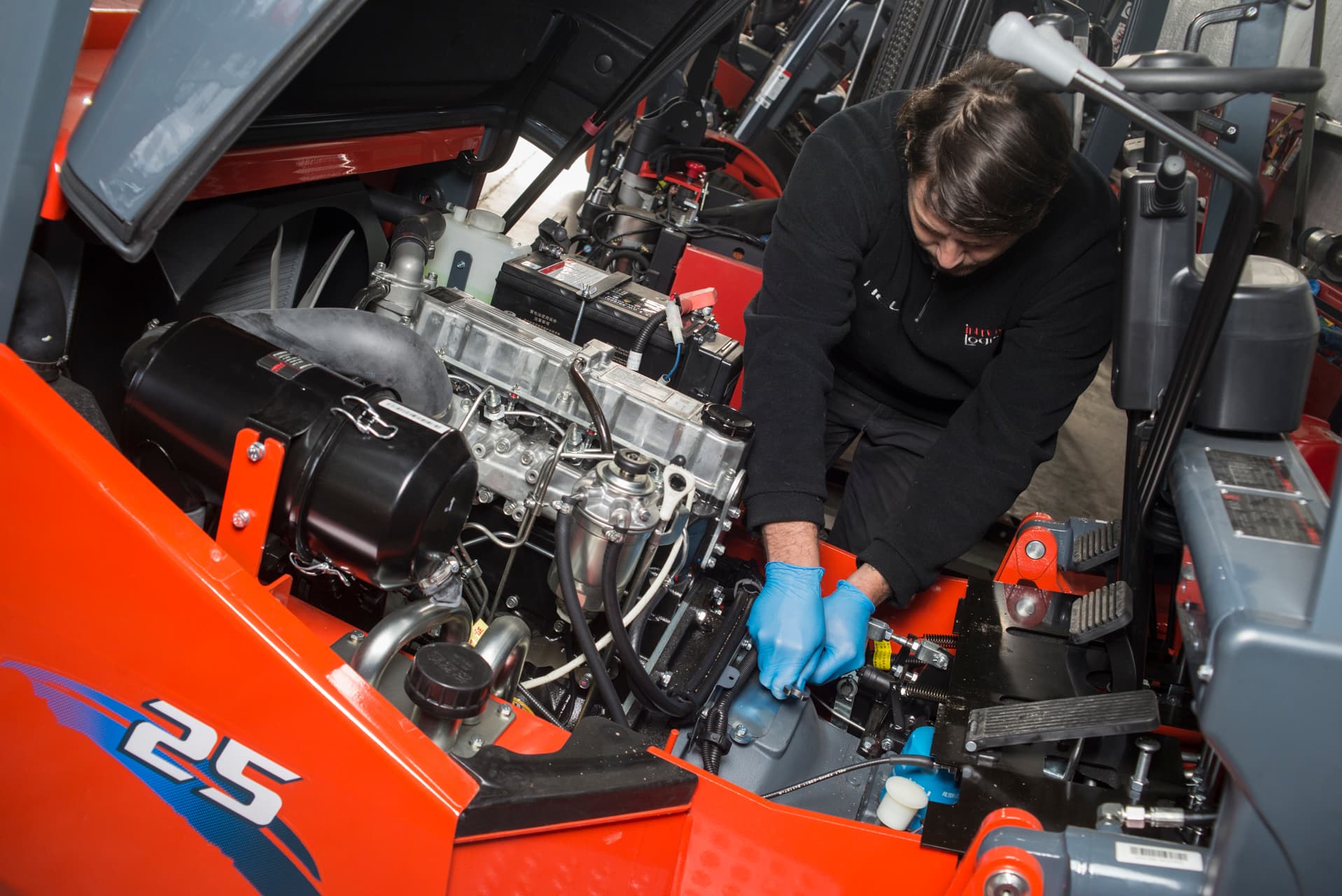
Scheduled maintenance: Add up the cost of filters, lubricants, and mandatory technical inspections divided by the service hour interval (for example, every 250 or 500 hours).
Consumables wear and tear: Include the replacement cost of tires (pneumatic or solid) based on the floor surface abrasiveness at your plant.
2. Unscheduled Downtime and Opportunity Cost
One of the factors that increases TCO the most is unexpected equipment failure. A machine stopped due to a lack of spare parts creates bottlenecks that affect the entire dispatch chain:
Failure rate and availability: Evaluate the mechanical reliability of the equipment. Having the official backing of Interlogistic guarantees immediate provision of genuine HELI spare parts to minimize downtime.
Labor costs: Factor in the salary and social security contributions of the operator assigned to the unit as part of overall operating costs.
3. Depreciation and Resale Value (Residual Value)
The TCO calculation is completed by projecting the commercial value loss of the machinery over the years:
Estimated lifespan: Define the operating projection of the unit (for example, 10,000 to 15,000 engine hours).
Residual value: Subtract the estimated resale price on the used market at the end of its useful lifecycle at your company. High demand for the HELI brand in Argentina ensures a competitive residual value that amortizes the initial investment.
Conclusion
Calculating TCO per working hour turns machinery procurement into a rigorous financial analysis. Choosing high-durability equipment with controlled maintenance costs is the formula to maximize fleet profitability in the long run.
If you want to calculate the financial impact of renewing your fleet with electric or high-efficiency internal combustion technology, we invite you to explore our HELI products catalog. To request a TCO analysis tailored to your plant's working hours, feel free to write to us through our contact section.
Share
The Interlogistic Team
Specialists in industrial logistics and equipment
.jpg&w=3840&q=75)