
A forklift (also known as a lift truck, autoelevador, or montacargas) is an essential piece of lifting equipment designed to load, unload, and transport heavy and voluminous materials efficiently. Its operation is fundamentally based on a system of adjustable forks or tines that adapt to the diverse needs of the load.
Due to the wide variety of models and applications available on the market, this type of heavy machinery is utilized in virtually every industrial, agricultural, or commercial activity that requires optimizing storage flows, streamlining cycle times, and reducing the amount of manual labor exposed to critical physical strain.
To organize this vast technological offering, motorized industrial vehicles are split internationally into 7 specific classes. Below, we detail the primary features of each:
The 7 Forklift Classes and Their Industrial Applications
CLASS I: Electric Motor Counterbalanced Forklifts
In these vehicles, the weight of the machine itself (heavily associated with its robust industrial battery) acts as a physical counterweight to balance the load transported on the forks, utilizing the front axle as the pivot point or fulcrum.
Operational advantages: Being 100% electric, they release zero harmful emissions and operate with minimal noise. They are the top choice for enclosed indoor spaces, cold storage facilities, or warehouses lacking active ventilation.
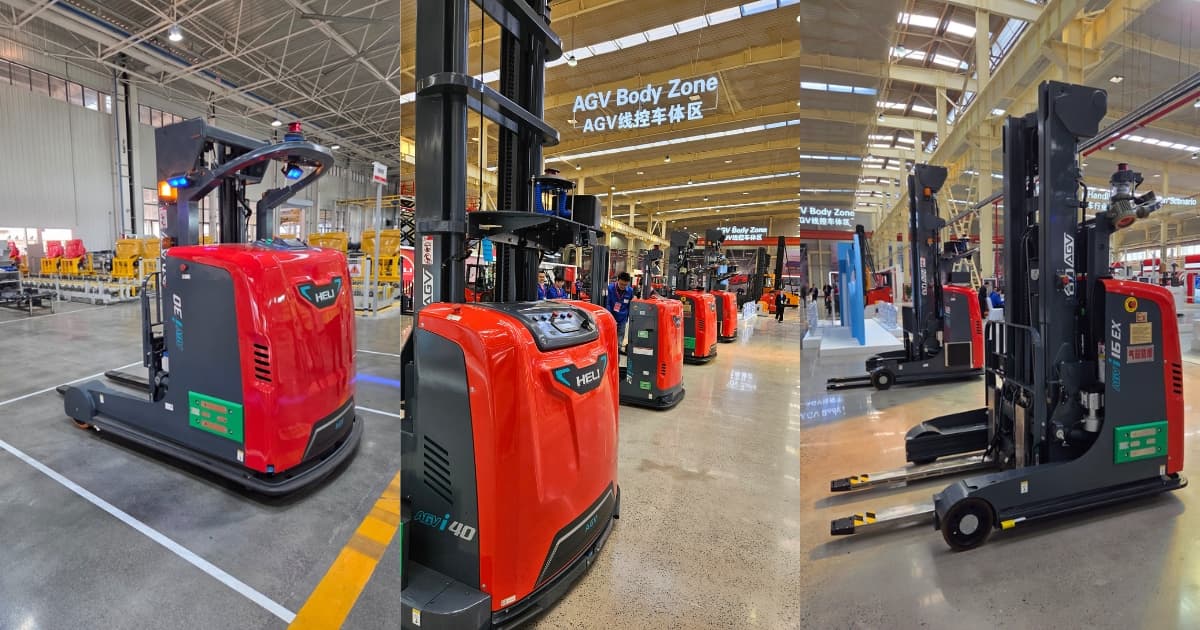
CLASS II: Electric Motor Narrow Aisle Trucks (Stackers & Reach Trucks)
These are compact, motorized vehicles engineered specifically to operate within confined layouts and narrow warehouse aisles. They utilize solid polyurethane wheels that require smooth, well-maintained floors. Within this class, two major families stand out:
Walkie Stackers: Compact units ideal for handling loads up to 1,600 kg and medium lifting heights of up to 5.50 meters. Some models incorporate flip-down platforms so the operator can ride onboard during long travel distances.
Reach Trucks: Engineered to optimize high-tier vertical storage, capable of reaching up to 12.50 meters. They frequently incorporate cutting-edge electronic assistance, such as mast-tip micro-cameras, cabin LCD monitors, and pre-set height selectors to guarantee millimeter-accurate placement.
CLASS III: Electric Motor Hand Trucks or Pallet Jacks
This class includes walkie or rider pallet jacks controlled by steering arms or central tillers. Their primary function is the horizontal transport of pallets at ground level, rather than vertical stacking in racking systems. Depending on the model and shift intensity, the operator can guide the machine walking on foot or riding on an integrated platform.
CLASS IV & V: Internal Combustion Engine Counterbalanced Forklifts
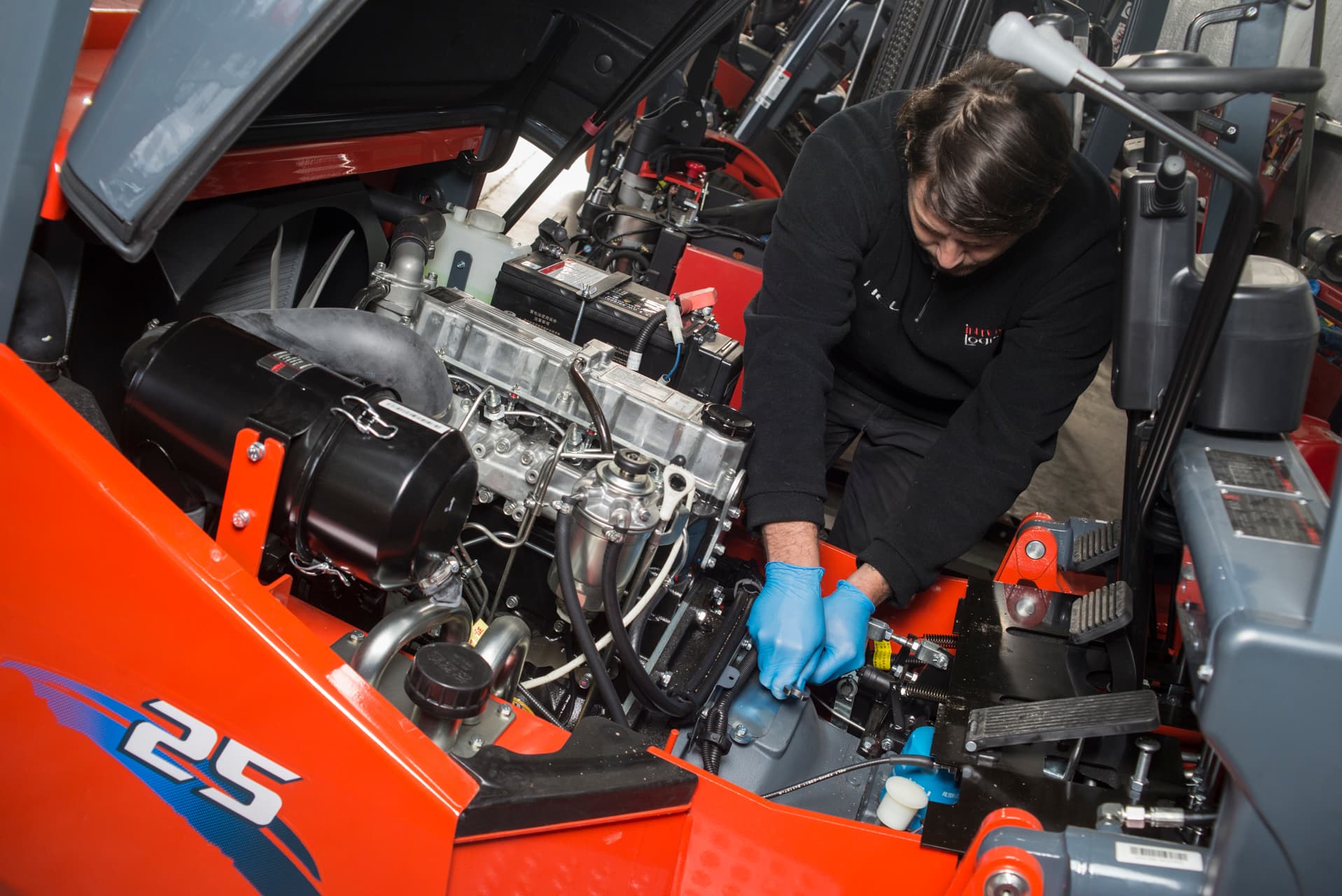
These are the classic sit-down forklifts driven by traditional thermal engines (Diesel, Gasoline, or LPG Gas). They represent the industry standard for continuous loading, unloading flatbed trucks, and staging heavy raw materials:
Class IV: Equipped with solid or cushion tires, ideal for factory interiors and smooth concrete floors where operators want to eliminate the risk of punctures.
Class V: Equipped with reinforced pneumatic (inflatable) or solid pneumatic-shaped tires, developed to offer superior shock absorption in outdoor shipping yards and irregular paved terrains.
CLASS VI & VII: Tow Tractors and Rough Terrain Forklifts
Heavy-duty industrial machines engineered for outdoor logistics and severe ground conditions:
Class VI: Industrial tractors and tuggers optimized for towing massive objects or material trains inside large industrial complexes.
Class VII: Rough Terrain Forklifts and heavy front loaders. They feature high ground clearance, adaptive tractive power, and high-profile deep-tread tires. They are indispensable assets in construction zones, mining facilities, and agricultural fields.
Conclusion
Identifying exactly which class of vehicle your warehouse requires is the fundamental step to making a smart capital investment, protecting your structural racking infrastructure, and maximizing the physical safety of your operators.
If you are looking to modernize your current fleet or need specialized technical advice to define which class of HELI forklift adapts precisely to your company's dimensions and flooring types, you can explore our products section by clicking here.
Share
The Interlogistic Team
Specialists in industrial logistics and equipment
.jpg&w=3840&q=75)